
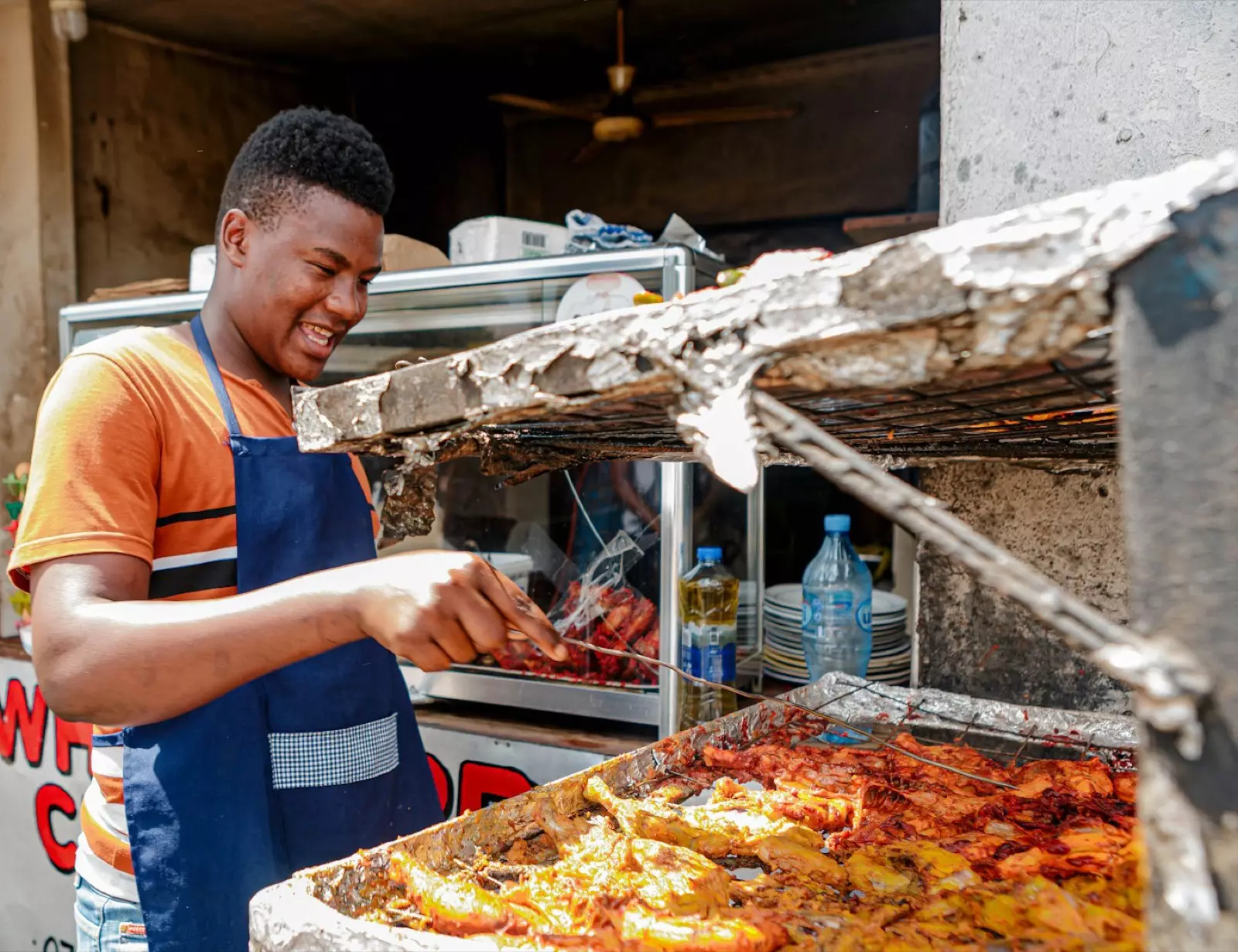
To sell home-cooked meals online in Ghana, start with a short menu of dishes you cook well, set an order cut-off time (for example, order by 10am for lunch), take payment by mobile money before you cook, and deliver to a small area you can reach while the food is still hot. Office workers, busy families and students are your best customers, and weekly meal plans turn them into regulars.
Jollof, waakye, banku and okro, fried rice, light soup, kelewele: people already pay for good home cooking. Going online lets you take orders without answering calls all morning, and get paid before you buy ingredients.
1. Keep the menu short
A short menu means less waste and faster cooking. Start with:
- Three to five main dishes you're known for
- Two or three sides (kelewele, salad, extra protein)
- One or two drinks (sobolo, asaana, fresh juice)
Rotate a "dish of the day" to keep regulars interested, instead of offering everything every day.
2. Set order times and cut-offs
Food businesses fail when orders come in at random. Decide:
- Order by 10am, delivered 12 to 2pm for lunch
- Order by 3pm, delivered 6 to 8pm for dinner
- Weekend orders by Friday evening for parties and family meals
Put these times in your bio, on your store and on every status post.
3. Get paid before you cook
The biggest risk in food is cooking for someone who never pays. Take payment first:
- Open a free Paylead store.
- Add each dish as a product with a photo, portion size and price.
- Use options for protein (chicken, fish, beef) or portion (regular, large).
- Set your delivery fee, or a free-delivery amount for big orders.
Buyers pay with MoMo or card when they order, and you see every order with the name, phone number and address. Paylead's fee is 4% + GH₵ 1 per online sale, so include that in your price.
For trusted regulars you can allow pay on delivery, but keep it to people you know.
4. Sell weekly meal plans
Meal plans are the steadiest income in a food business.
- Lunch plan: five lunches a week, delivered to the office.
- Family dinner plan: three dinners a week for four people.
- Fitness plan: portion-controlled meals with the protein listed.
Sell the plan as one product paid up front for the week. If you're on the Pro plan, you can charge it as a subscription so buyers pay automatically each month.
5. Office deliveries
One office can be ten orders a day.
- Leave a menu with the receptionist or post it in the office WhatsApp group (with permission).
- Offer a group delivery time so one trip feeds the whole floor.
- Give one person in each office a small commission with an affiliate link to collect orders.
6. Food safety and presentation
- Cook in a clean space and keep raw and cooked food apart.
- Pack in sealed containers that keep soups from leaking.
- Label each pack with the dish and the time it was cooked.
- Deliver fast: set a radius you can reach in 30 to 40 minutes.
- Check the rules: food businesses may need permits from your local assembly and the Food and Drugs Authority as you grow. See how to register a business in Ghana.
Good packaging is also marketing. A sticker with your name and store link on every pack brings repeat orders.
7. Get your first customers
- Post the menu every morning on your WhatsApp status with the cut-off time.
- Short videos of the food being served steaming hot. Food videos sell themselves.
- Free tasting for one office or church group.
- Ask for reviews and post screenshots (with permission).
Read WhatsApp Status marketing for a daily posting plan.
Frequently asked questions
Can I sell food from home in Ghana?
Many people do. Start small, keep your kitchen clean, and look into permits from your local assembly and the FDA as orders grow.
How do I avoid wasting food?
Use cut-off times, keep the menu short, and cook only what's been paid for, plus a small extra for walk-in orders.
How much should I charge for delivery?
Charge by distance, or include delivery in the meal price within a small area. See how to set delivery fees.
Read next: how to take cake and pastry orders online, how to find delivery riders and how to get repeat customers.